The Lone Star Youth Orchestra
Events
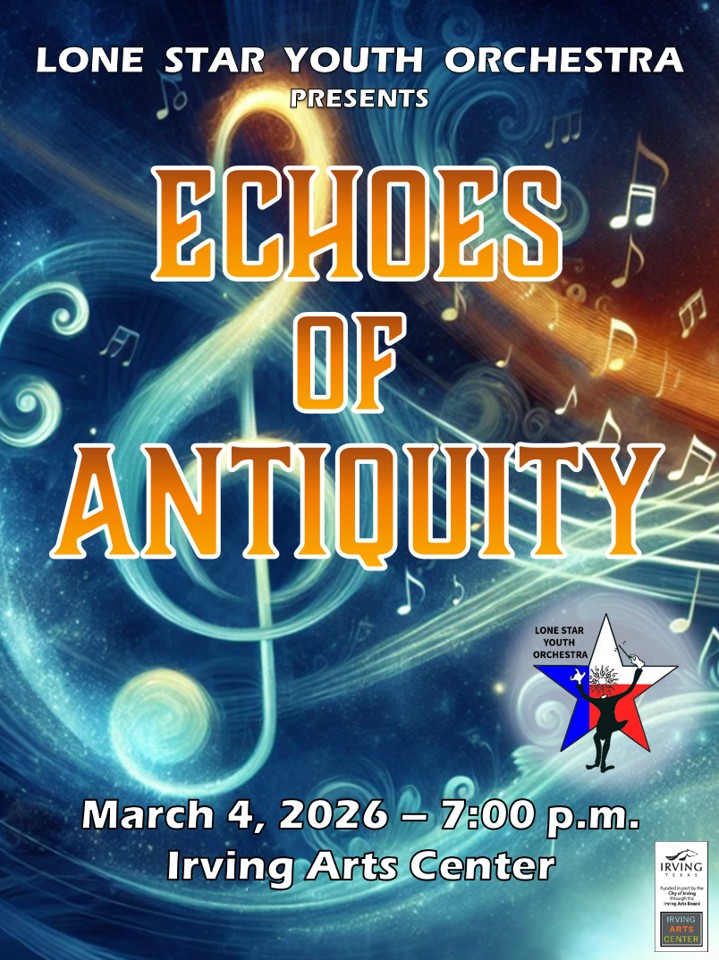
Wednesday, March 4, 2026
This Lone Star Youth Orchestra concert will feature works by Tchaikovsky, Haydn, Parrish, and Saint-Saëns.
LSYO concert dates for the 2025-2026 season are:
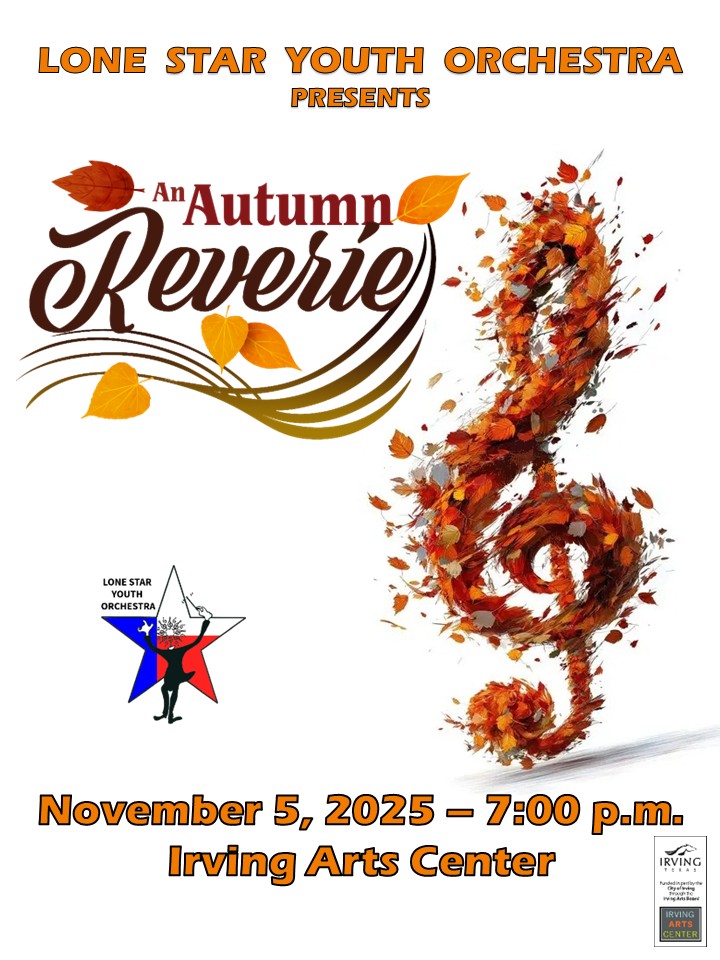
November 5, 2025
March 4, 2026
May 20, 2026
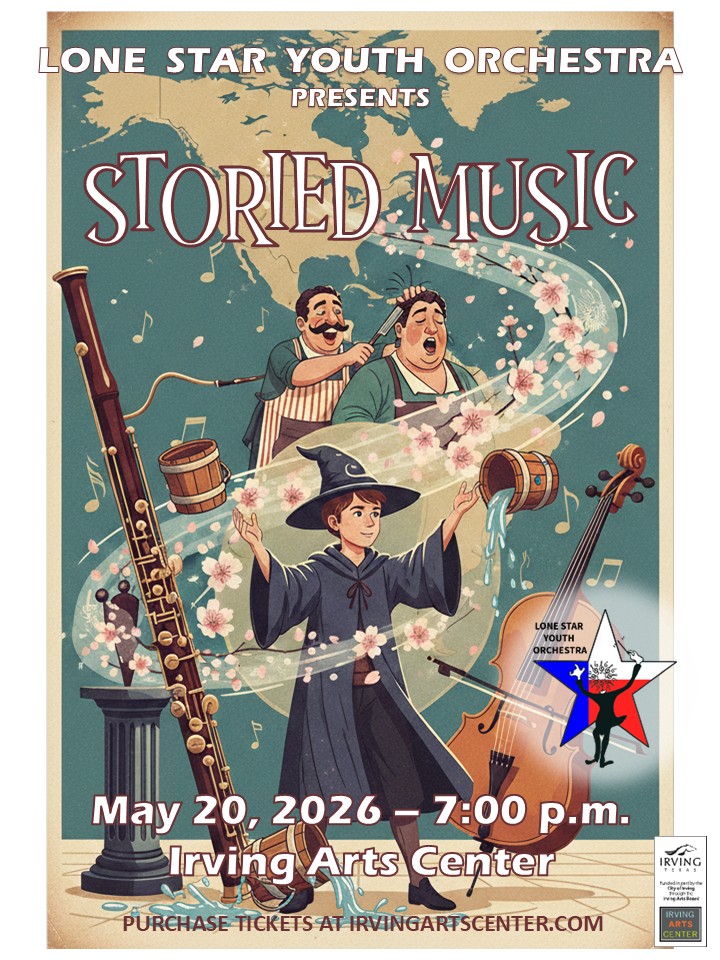
The Lone Star Youth Orchestra concludes its triumphant 27th season on May 20th with a concert titled “Storied Music”. This hour-long program features Paul Dukas’ Themes from The Sorcerer’s Apprentice, Gioachino Rossini’s Overture from The Barber of Seville, a folk song from Taiwan called Spring Breezes, and the fourth movement from Antonín Dvořák’s Symphony No. 9 in E Minor “From the New World”, Op. 95. As an added treat, the winners of our annual LSYO Concerto Competition will each be playing their pieces with the orchestra. First Place winner Nico Ramé will perform the third movement from Carl Maria von Weber’s Concerto for Bassoon in F Major, Op. 75 and Second Place winner Aiden Hurtado will play the first movement from Camille Saint-Saëns’ Concerto No. 1 in A Minor, Op. 33.
The Sorcerer’s Apprentice was composed in 1897 by French composer Paul Dukas and is one of the most famous examples of program music, music that tells a story. The piece is based on a poem by Johann Wolfgang von Goethe about a young apprentice who tries to use magic while his master is away. When he enchants a broom to carry water for him, the spell quickly spirals out of control, and chaos follows.
The music vividly portrays the story through driving rhythms, swirling melodies, and dramatic crescendos. Concertgoers may recognize the piece from its appearance in Disney’s film Fantasia.
The lively overture from Gioachino Rossini’s famous opera The Barber of Seville is one of the most recognizable openings in classical music. Written in 1816, the opera tells the comedic story of the clever barber Figaro and his schemes to help two young lovers overcome a series of humorous obstacles. The overture perfectly captures the playful spirit of the opera. It begins quietly before gradually building in energy through Rossini’s signature “Rossini crescendo,” where repeated musical ideas grow louder and more exciting each time they return. Concertgoers may recognize the piece from the popular Bugs Bunny cartoon, “Rabbit of Seville”.
Composed in 1872 by French composer Camille Saint-Saëns, the Cello Concerto No. 1 in A Minor is one of the most beloved concertos in the cello repertoire. Unlike many concertos of the time, the piece begins immediately with the soloist rather than a long orchestral introduction, launching the music forward with energy and excitement. The concerto highlights the cello’s wide expressive range, from powerful, dramatic passages to warm and lyrical melodies. Saint-Saëns skillfully weaves the solo cello and orchestra together, allowing the instrument to sing, soar, and display remarkable technical agility.
Spring Breezes is based on a traditional folk song from Taiwan, celebrating the gentle arrival of spring. Like many folk melodies, the tune has been passed down through generations and reflects the natural beauty and cultural traditions of the region. The music evokes the feeling of warm breezes, blooming flowers, and the peaceful renewal that comes with the changing seasons.
Composed in 1811 by German composer Carl Maria von Weber, the Concerto for Bassoon in F Major is one of the most celebrated works in the bassoon repertoire. Weber wrote the piece for a talented court bassoonist in Munich, and it quickly became a showcase for the instrument’s surprising agility and expressive range. Throughout the concerto, the bassoon moves between playful, virtuosic passages and warm, lyrical melodies. While the instrument often provides support in the orchestra, this concerto places it in the spotlight, allowing the soloist to demonstrate both technical skill and musical expression.
Antonín Dvořák wrote his Symphony No. 9, “From the New World,” in 1893 while living in the United States. Inspired by American culture, spirituals, and folk melodies, the symphony blends Dvořák’s Czech musical roots with sounds he encountered in the “New World.” The fourth movement serves as the thrilling finale of the symphony. It opens with a bold and powerful theme that returns throughout the movement, creating a sense of drama and excitement. A triumphant conclusion to both the concert and to LSYO’s tremendously successful season!
Single tickets are available by visiting IrvingArtsCenter.com, by calling (972) 252-2787, or by purchase at the door. Ticket prices are $7.50 per student and $14.50 for adults.
Past Events